
Effective Home Workouts Without Equipment
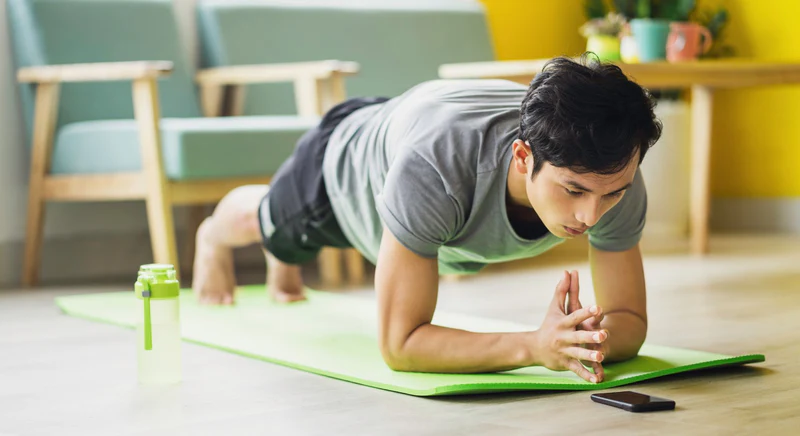
You do not need a costly membership or special gym equipment to stay fit. In fact, many of the most effective workouts can be done right at home with your body weight. They have become popular due to being convenient, inexpensive and suitable for all fitness levels. No matter how busy your life is, or if you have limited space and prefer to exercise at home: bodyweight workouts can help you gain strength, perform endurance exercises and maintain overall health.
Why Choose Equipment-Free Workouts?
The greatest benefit of equipment-free workouts is their accessibility. You can exercise when and where you want, without worrying about gym hours or paying for gear. These workouts use natural body movements that work multiple muscle groups at the same time, making them effective in improving functional strength, balance and coordination.
Bodyweight exercises also provide a solution for varying levels of fitness, due to their nature as they can be adjusted for each user. Beginners can begin with uncomplicated moves and increase density over time, whilst more seasoned athletes can incorporate workout intervals / reduce downtime / or use a progressions for each of the moves.
Start with a Proper Warm-Up
So, when starting any workout, you need to warm your muscles and joints up first. By warming up for a few minutes five or ten your body gets ready to accept exercise and can reduce the risk of injury. Common exercises include marching in place, arm circles, jumping jacks, high knees and ranges of motion/body dynamic stretch type movements to get blood flow going and move through the activity.
Also, a good warm-up can improve your performance at workout because it wakes up the muscles that you are going to use when performing exercise.
Essential Bodyweight Exercises
Free weight workouts are the foundation for all great home workouts. Squats are one of the best exercises to work the legs, glutes and core. Squats stand shoulder-width apart, sit your hips back as if sitting in a chair and return to a standing position.
Pushups: This is one of most effective exercises to train your chest, shoulders, arms and core. Beginner: Perform push-ups on your knees or against a wall Advanced: Try decline or diamond push-ups for extra difficulty.
Lunges are a lower body strength exercise that also works on balance and stability. Step forward with one leg, lower to a position where both knees are bent and then push back to the starting position.
Planks are great for the core. Keep your abs tight and hold a straight-body position supported by your forearms and toes. Planking regularly helps to extend the spine and improve body posture, alignment, and stability.
Creating a Full-Body Workout
An ideal home workout should work all the major muscles. An example of a very basic workout would be squats, push-ups, lunges, planks and jumping jacks. Do each exercise for 30 to 45 seconds, then take a little rest. Do three to four rounds depending on your fitness level.
This circuit-style training maintains cardiac output while increasing muscular endurance and burning kilojoules. It also lets you do an effective workout in as low as 20 to 30 minutes.
Adding Cardio for Better Results
However, cardio workouts are commonly used for calorie burning and heart health. Luckily, lots of cardio exercises can be performed in the home with no equipment needed. Five or 6 most intense seconds of a cardio workout. You can jump up and down, do mountain climbers, high knees, burpees, running in-place.
A circuit a combination of strength and cardio exercises in a single workout provides an efficient way to improve your muscular fitness and cardiovascular endurance. This method can assist in managing weight while keeping the workouts very engaging and rigorous.
Staying Consistent and Motivated
Consistency is the main factor to achieve fitness goals. Pick a workout schedule that is possible to accomplish. As little as 20 to 30 minutes of exercise a few times per week can lead to incredible gains in strength, energy levels and health.
Setting realistic goals, tracking your progress and changing up your workouts often will help to keep you motivated. Working out with family or friends, listening to music at the same time, and following exercise routines on social media can all help.
Conclusion
No equipment, home workouts are a simple and cost effective habit to stay active and healthy. For weight training, you build strength and endurance by performing isometric exercises such as squats, push-ups, lunges, planks and other variations, running in place or doing jumping jacks for cardio movement. Home workouts can yield astounding outcomes without requiring a gym or any costly apparatus assuming that you adhere to the unique cycle of activity consistently.



Leave a Reply